


A Teenage Rebel WITH a Cause
- innerweavings
- Dec 17, 2019
- 9 min read
Teenagers have long identified with rebellious characters. Who could forget the iconic question from On the Waterfront: “Johnny what are you rebelling against” and Johnny’s (played by Marlon Brando) offhand cool response of, “What you got?”
No matter the generation, young teens seek out those rebellious figures, and whether they be in film, music or even politics, society often finds and emulates these rule breakers. Many times this is done on a road to self-discovery. Sadly, the only discovery they make often leaves them feeling more disillusioned. Such individuals become disillusioned when, for example, the professional athlete they admire is revealed to have a dependence on steroids or the musician that defies labels is suddenly labeled through our criminal justice system as a confessed criminal.
How refreshing would it be if we, as Christians, had more examples of teenage models of our faith!
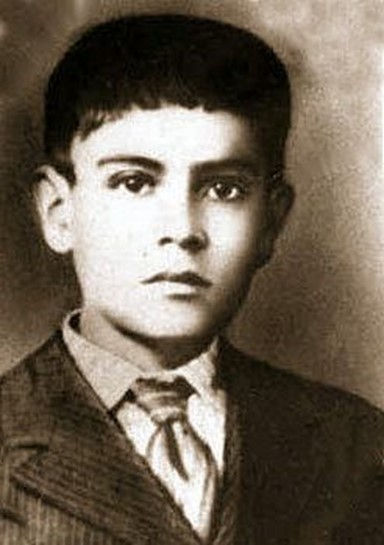
Given our rich heritage, it is disheartening when these noble, Godly figures are often lost to history. Within the great tapestry of Christian faith these heroes and heroines patiently wait only to be rediscovered and shared among all Christians. We at Innerweavings think about these figures often, in fact they are the reason for this blog. For example, when we think of a teenage rebel, we don’t imagine James Dean smirking with a cigarette dangling from his mouth. No, we think of a young man who, at the mere age of 14, gave everything he had for the God he loved. This is his story. His name is Jose Luis Sanchez del Rio and he was born on March 28, 1913 in Mexico.
For this small boy the Mexico of his birth was one that was troubled. The Mexican constitution of 1917 (a true work of the Socialists) had ignited a terrible and deadly conflict. The new Socialist constitution put the Christian Church (primarily Catholic) under the control of the State. It closely regulated all preaching as well as services, baptisms, funerals and weddings, and tithing. The Mexican President at that time was a man named Venustiano Carranza and he, at least initially, did not enforce these strict anti-Christian laws. However, when his successor, Plutarco Elias Calles, assumed power in 1920, he ruthlessly enforced these new laws with an iron fist. He began by sending many Christian priests into exile.
The movement against the church by the state only got worse when Calles unleashed the “Ley Calles” or Calles Law on July 31, 1926. This law forbad the practice of Christian religion in public. Schools that had been founded by Christians were made defunct or placed under direct control of the government. The Governor was particularly rabid in his hatred of Christians and he made it illegal for anyone (but especially Priests) to speak out against the government or the new laws. Christians that chose to ignore the laws were fined or imprisoned. Repeat offenders (such as the Godly Father Miguel Pro) were executed to serve as an example for possible future offenders.
Such an environment certainly caused Christians to despair, but instead of forfeiting their faith and their God, they chose to pray to Him for a solution. God answered them in the form of the “Cristeros.” This movement would see the young Jose Luis Sanchez del Rio playing a major role. Jose had been born to a devout Christian family. His two older brothers had already joined the Cristeros movement and young Jose, who had witnessed the persecution of the Church, wanted to join them. However, due to his tender age his parents were reluctant to see him join his brothers in this fight. After much thought and prayer his parents finally allowed him to join the movement. Jose told his Mother Maria that “For Jesus Christ, I will do everything.” He did not join the Cristero camp alone as his friend, a boy named Trinidad Flores, joined him on this quest. Once in the Cristero camp, Jose and Trinidad were given simple tasks that would, hopefully, keep them out of real trouble. They were given instructions to serve the food, care for and feed the horses, as well as cleaning the guns. Because Jose was such a cheerful worker, he quickly became a camp favorite among the older soldiers. He would attend Mass and pray daily. It was during this time that he was placed under the care of General Luis Guizar Morfin who gave him the job of standard bearer and bugle caller. The General looked upon him as a caring brother would and considered it his duty to keep the young boy out of harm’s way.
During a battle on February 6, 1928 the Cristeros had ambushed the enemy and quickly found themselves outnumbered and outmatched. When the order was given for retreat the Federal machine gun fire cut many soldiers down and young Jose saw his General’s horse drop - having been struck by a lethal bullet. While the General scrambled for cover, young Jose selflessly jumped off his own horse and urged the General to take his horse. The General only wanted Jose to run but Jose insisted “I am young, you are more important than me.” The General considered this and most likely knowing the enemy would show mercy to a young boy he reluctantly accepted Jose’s offer of his horse. The General then rode off and left Jose behind. Jose for his part refused to flee and was soon caught by the Federals. He was, sadly, not treated with mercy. He was insulted, beaten and sneered at before being thrown into prison at Cotija. He was later transferred to the Catholic church in Sahuayo, where he had been baptized. The once beautiful church had been turned into a stable for the Federal’s horses. The beautiful church now reeked of horse dung littered with all manners of filth including empty beer bottles.
The news of young Jose’s capture and subsequent imprisonment did not go unnoticed. There were many attempts to negotiate his release, but the soldiers refused to release him. Jose had a powerful godfather, a man named Rafael Picazo who was a local political boss that tried to negotiate a deal that would allow for his release. He did so, successfully arranging a deal where Jose would agree to attend military school and, upon his graduation, join the Federal Army. This arrangement horrified young Jose who, upon the suggestion, stated: “I’d rather die first. I will not go…. Never with those persecutors of the Church! If you let me go tomorrow, I will return to the Cristeros! Viva Cristo Rey (meaning Long Live Christ the King)!”
Poor Jose would continue to be tormented and horrified by these men that spurned God and persecuted his people. He observed what he knew was sacrilegious behavior on the part of his captors. He witnessed them fighting cocks inside the church and to his horror these men had the birds fighting in the sacred sanctuary. The birds were allowed by the soldiers to roam freely, perching and defecating on what Jose rightfully saw as holy ground. Jose waited until the soldiers were distracted and then he grabbed each rooster and broke their necks one at a time, until none were left. After he had done this, he washed his hands and prayed. The outrage Jose felt as he watched his blessed Lord being insulted by the profane display caused him to act. He acted in obedience to God’s will and his word. Jose surely must have been reminded of Jesus who cleaned out the Temple of the vendors.
The soldiers did not see or care that Jose was following the example of our Lord. They became enraged grabbing him and shouting “Don’t you realize what you did? Don’t you know the cost of a rooster!” Jose, although just a young boy spoke with more wisdom than any of his captors when he stated “The only thing I know is that the house of God is not a corral nor a barnyard! I am willing to endure everything. Shoot me now so that I can go before our Lord.” Jose counseled other prisoners to not give into fear. He counseled them to remember Father Miguel Pro (https://www.shinetheirlight.com/post/long-live-christ-the-king-the-battle-cry-of-blessed-father-miguel-pro) and Anacleto Gonzalez Flores who were both martyrs for Christ.
It was the decision of his Godfather to execute young Jose and so, on February 10 Picazo issued the order of execution. When informed of his pending execution Jose did not show fear but asked, and was granted, the ability to write a final letter to his family. His final dinner was given to him by his Aunt Magdalena. They prayed together but when it came time to tell his Aunt goodbye she broke into tears. Jose exhibited a courage only God can bestow, and he gently told his sorrowful Aunt, “Take care of my mother. Tell her not to rush (to see me) as I will have already won Heaven.” His Godfather had wanted the execution to be conducted quietly without a firing squad. The Federals had other ideas, they decided to cut the soles of the young boy’s feet with a knife. Then they made him march to the place of his execution while throwing empty beer bottles in his path so that he would be forced to walk over the broken glass. During the march they beat him brutally, but he continued to shout, “Viva Cristo Rey (Long live Christ the King)!”
This young man was made to walk barefoot and broken to the path of his execution where a hastily dug pit stood waiting. The soldiers screamed blasphemies at him with demonic hatred. They praised their heretical and Godless government all the while trying to make Jose deny his faith. When Jose stopped to survey the scene, a cruel soldier hit him with his rifle butt breaking the young man’s jaw. The remaining soldiers joined in with demonic frenzy stabbing him repeatedly with pen knives. Although Jose was slowly bleeding to death, he remained rebellious enough to defy the soldiers. He stated, “You have done a lot to me, but God allows me to continue.…When I can no longer speak know that I will wiggle my feet and that too means, Viva Cristo Rey.”
One of the officers approached the dying boy and asked him sarcastically “What should we tell your father.” The implication being that they would delight in telling his father of his son’s death. Jose answered defiantly “Tell him we will see each other in Heaven. Tell him I’m going home!” The officer had expected cowering and pleas for mercy, not this defiant and sincere answer from the dying boy. This caused the officer to lose his temper and he, overtaken with anger, shot Jose behind the ear. The young martyr’s body was hastily thrown into the pit and the soldiers departed. Luckily, the undertaker witnessed this terrible scene and ran with great haste to the home of Jose’s uncle Ignacio Sanchez who was a priest. Father Sanchez and the undertaker returned to the boy’s grave in order to give him a proper Christian burial. The soldiers had hoped that the execution of Jose would serve as a warning to other young men not to fight the government. They had hoped that Jose would serve as the tragic example of what can happen to Christians, even very young ones, who refuse to comply with the government’s assault on Christianity.
The people took notice of Jose’s execution but not for the reasons the federals had hoped. They realized Jose was a boy martyr for the faith, an example to other Christians to keep their eyes on a heavenly home at any and all costs. In 1996 Jose’s remains were transferred to be enshrined at the church of his baptism, the church he had loved so much and the church that was the scene of his captivity.
The boy martyr not only served as an example to Christians under attack in Mexico during the days of the Cristeros, but he serves as an example to Christians today. His humble faith and his refusal to deny his Lord at any cost is a shining example of what we, as Christians, should be reflecting every day in our walk with the Lord. For despite what so called “prosperity gospel” proponents might advocate, we know that we will face persecution and attacks on our faith. It is how we choose to handle ourselves amidst attacks that will define our role as Christians.
Perhaps, thankfully, the attacks you and I encounter are not life threatening but only small stones cast. What small stones? If you look at your life you might recognize the stones as small sarcastic remarks said by a coworker that is a non-believer, or the accusation that if God really existed why does he allow tragedies. How are we to answer? With certainty - for we well know that the teaching of Christ is clear. Will we deny Him to save face with a coworker or a casual friend? Will we back away from a controversial topic in fear that if we reveal what we as Christians believe, we will be denounced and attacked in this age of social justice? We have often heard the question “What would Jesus Do?” What an appropriate question to ponder as we discuss the bravery and martyrdom of a young boy who, when asked to say Christ the King is dead, refused. Instead young Jose told his persecutors Viva Cristo Rey (Long Live Christ the King) and then he died at the hands of his cruel persecutors. However, his death allowed him to go, as Jose himself stated, home to heaven.
Jose was beatified by the Catholic church on June 22, 2004 and was canonized as a Saint on October 16, 2016. May we seek to imitate the virtues of this young boy - this rebel with a cause! Truly, with the only cause that matters. May we recall his courage and face those that would challenge our faith with patience and fortitude and with great faith.

Comments